
A Beacon of Indian Culture and Knowledge
Established in 1948 in Bikaner, Bharatiya Vidya Mandir (BVM) is a revered institution dedicated to the preservation, promotion, and dissemination of Indian culture, values, and knowledge. With a rich legacy of over 70 years, BVM has been a hub of learning, education, research, skill development and cultural activities, fostering a deeper understanding of India’s glorious heritage.
Our Mission
BVM’s mission is to promote Indian culture, including its diverse facets, alongside human values and samskaras (cultural ethos), while also emphasizing the development of scientific consciousness and all-round development of human beings. We strive to achieve this through various activities, including publication, seminars, institutions, education, research, training and skill-development programs.
Our Activities:
Publication: BVM publishes significant texts in multiple languages, including Hindi, Bengali, Rajasthani, Tamil, Kannada, and English. Our notable publications include:
- Vaichariki: A bi-monthly research magazine on Indian culture in Hindi and being published for more than last 50 years. Dr. Babulal Sharma is the Editor of this magazine.
- Books on Indian Culture.
- Literatures in Hindi, Sanskrit and other languages.
- Books on science and applied technologies.
Library: Our comprehensive library in Kolkata and Bikaner offers a vast collection of books on literature, Indian culture, and technical subjects, including:
- Physical Library – Having full set up in Kolkata and Bikaner. Books are available on literature, Indian culture and other technical subjects. To name a few :
- All issues of our publications
- Books on Hindi Literature
- Books on Sanskrit Literature
- Books on Purans, Itihas and Shastras
- Books on Philosophy
- Books on Folk Culture
- Books on Pustimarg & Haveli Sangeet
- Books on Science and Consciousness
- Books on applied technology
- Some old manuscripts in Hindi, Rajasthani and Brijbhasa
- Our own publications (Catalogue attached)
- E-Library – To facilitate inquisitive and interested readers to read or study online from any part of the world.
- Audio-Visual Library – Digitized library of our programs, conferences seminars and others.
All the libraries are facilitated with comfortable reading room. The libraries are looked after by our Librarian.
Associated Work:
- BVM Institute of Applied Technologies – Conducting skill development programs for Workers, Supervisors and Engineers including Artificial Intelligence (AI). We have a team of Engineers and Trainers under the guidance of the expert and experienced Engineers. The training is carried out in the training centers on various projects. Training manuals of all the programs including a book on AI in Project Construction Management have been developed.
- Puran & Itihas Adhyayan Kendra – Regular lectures are conducted on Puran Parichay and a scholar is doing research on Puranas.
- Lok Sanskriti Adhyayan Kendra – Regular programs are taking place.
- Pusti Marg & Haveli Sangeet Adhyayan Kendra – Lectures are regularly held by Acharya Milan Kumar Goswami on various Shastras of Pusti Marg.
- Brit Parab Utsav – The lecture programs are regularly conducted by Pt. Shivkishan Kiradu.
- Science-Society Symbiosis – Regular lectures are conducted by eminent scientists where the senior members of the society are also present and interactions take place.
- Health & Hygiene – Lectures are regularly conducted by the Doctors from renowned hospitals and medical colleges.
The centers are guided by some eminent and highly renowned scholars and dignitaries.
Music School: We are also running following three music schools :
- Pt. Jasraj School of Music, Mumbai
- Pt. Jasraj School of Music, Kolkata
- Madan Mohan Sangeet Vidyalay, Bikaner
The music concerts, programs and the conferences of young and up-coming artists are conducted from time to time by the respective faculties and students of the above said music centers.
All the proceedings are recorded, printed, digitized and uploaded on the YouTube Channel of Bharatiya Vidya Mandir.
Academic Institutions:
- English Medium: Girdhar Das Mundhra Public School, Bikaner –
GDM Public School, Bikaner was established in 1988 by Shree Charity Trust, Kolkata, inspired by Seth Madhodas Mundhra’s vision. The school provides modern education with a focus on holistic development, character building, and human values. The school has a library of 6,000+ books. The school is having its own playground and a fertile 4 Acres land growing flowers, vegetables and fruits.
- Hindi Medium: Girdhar Das Mundhra Bal Bharati, Bikaner –
On August 15, 1949, Rajasthan Bal Bharati was established in association with Bharatiya Vidya Mandir and guided by Seth Girdhardas Mundhra and Shri Sambhudayal Saxena. The school introduced the Montessori system and provided affordable primary education to underprivileged children in Rajasthan. Today it has become a trusted institution shaping young minds in independent India.
All the centers are taken care of by the respective Advisory Body under the umbrella of a Managing Committee headed by Dr. Bithal Das Mundhra, Group Chairman.
The History of Bharatiya Vidya Mandir
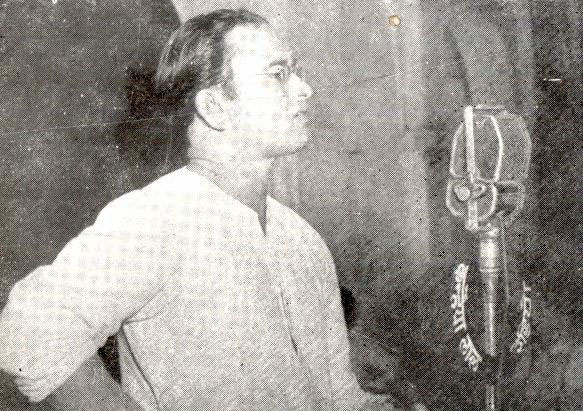
Professor Nathuram Khadgawat
After the independence of India, in the aftermath of partition significant emphasis being laid on the importance of education for the people of the working class who had to discontinue their studies midway. Prof. Nathuram Khadgawat was one of many scholars in Bikaner who realized the importance of creating an avenue for educating such displaced people.
On the 9th of August 1948, on the occasion of August Kranti Diwas, the selfless efforts of Prof. Khadgawat came to fruition. To support the cause, some eminent personalities in the fields of education and literature and some well-known philanthropists came together.
Bharatiya Vidya Mandir was established, inspired and guided by Shri Moolchand Pareek, Shri Girdhardas Mundhra, Shri Narottamdas Swami, Shri Shambhudayal Saxena, Shri Agarchand Nahata and Shri Falgun Goswami, ably supported by Shri Satyanarayan Pareek, Shri Madhodas Vyas, Shri Someshwar Pandya, Shri Bhanwarlal Mahatma and Shri Babulal Vyas with financial assistance of Khushalchand Daga, Shri Ram Gopal Mohata, Shri Shrigopal Mohata, Shri Bhagirath Mohata, and Shri Motichand Khajanchi.
On the 19th of August, 1948 on the auspicious occasion of Raksha Bandhan, the Education Minister of Rajasthan inaugurated Bharatiya Vidya Mandir in Bikaner. The organization would aim to provide education for the section of people who could not continue their education due to partition and displacement. The organization also had an agenda of education for women and children as well as research work related to Indian Culture.
In 1954, Bharatiya Vidya Mandir took management control of Rajasthan Bal Bharati, a primary school established in Bikaner on the 15th of August 1949. On the 1st of July 1957, Bharatiya Vidya Mandir Shodh Pratisthan was established and on 1st April 1970 the Central Council was formed. Ever since, various research work on education and literature and culture have been conducted by these organizations.
In 1971, ‘Vaichariki’ a quarterly research journal was published and with this Bharatiya Vidya Mandir began publishing books on literature, culture and history. Since 1971, innumerable books glorifying and detailing various aspects of the culture of Rajasthan and India, like Gogaji Chauhan Ri Rajasthani Gatha, Pracheen Kavyon ki Roop Parampara, Naagadaman, Ranmall Chhand, Mauktik, Amiya Halahal Madbhare, Bharatiya Tatwa Chintan, Rajasthani Lok Mahabharata, Sukhi Jeevan, Krishna Avatar and Vaman Viraat have all been published by Bharatiya Vidya Mandir.
For over four decades, the organization functioned smoothly but fell then into rough waters as due to inflation and increasing financial burden, the running of the organization slowly became very difficult. The organization eventually recovered, having received financial aid and support from the likes of Seth Govind Das Malpani, Thakur Prem Singh, Shri Shankar Sahay Saxena and Shri Anil Bordia.
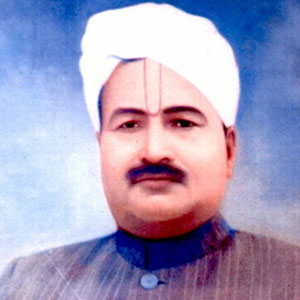
Seth Girdhardas Mundhra
From its very inception, the organization had the unflinching financial and administrative support of Seth Girdhar Das Mundhra, who was a member of the organization as well as the President of Rajasthan Bal Bharati. He had plans of constructing a building for Bal Bharati for which land had already been purchased. But his death spread uncertainty over all plans. Both his sons Shri Madho Das Mundhra and Shri Jagmohan Das Mundhra were also associated with the Bharatiya Vidya Mandir. Shri Madho Das Mundhra decided to support the cause of this four decade old body. At the request of the management committee of Bharatiya Vidya Mandir, Shri Charity Trust, whose Managing Trustee was Shri Madho Das Mundhra, agreed to fund and take responsibility of extending all financial support to the organization.
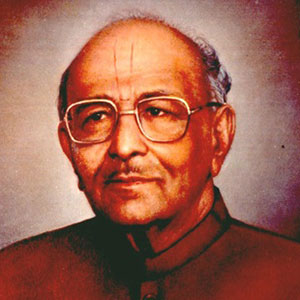
Seth Madhodas Mundhra
On the 1st of April 1988, Shri Charity Trust formed Shri Girdhardas Mundhra Sikshan Sansthan which became the governing body for all the organizations and initiatives under Bharatiya Vidya Mandir.
On this occasion, most of the existing organizations were given new names by which they would be known in future.
• Girdhardas Mundhra Vidya Mandir Ratri Senior Uccha Madhyamik Vidyalaya (previously Bharatiya Vidya Mandir Ratri Vidyalaya).

• Girdhardas Mundhra Bal Bharati (previously Rajasthan Bal Bharati).

• Bharatiya Vidya Mandir Shodh Pratisthan would retain its name.

• Girdhardas Mundhra Sikshan Sansthan Kendriya Karyalaya (previously Bharatiya Vidya Mandir Kendriya Karyalaya).
The rest, including affiliations, staff, grants, associates and administration remained the same. The various arms of the governing body – its various institutes and organizations, still dedicate themselves to the original dreams of the founders of the organization –
• Quality education for the underprivileged boys and girls.

• Training women in traditional trade and crafts to make them independent earners.

• Spreading awareness of the Indian culture and heritage.

• Collection and preservation of ancient artifacts, manuscripts and inscriptions.

• Establishing museum and library for enabling research work related to Indian culture.
This noble idea and unique effort of Bharatiya Vidya Mandir stimulated admiration in many leading scholars and top organizations who wanted to grace the institute and be a key part of this eternal process. Amongst them is Simplex Infrastructures Limited, a pioneer in the construction sector which is headquartered in Kolkata.
The people at the helm were deeply inspired and were desirous of participating in the process of preservation and propagation of Indian Traditions.
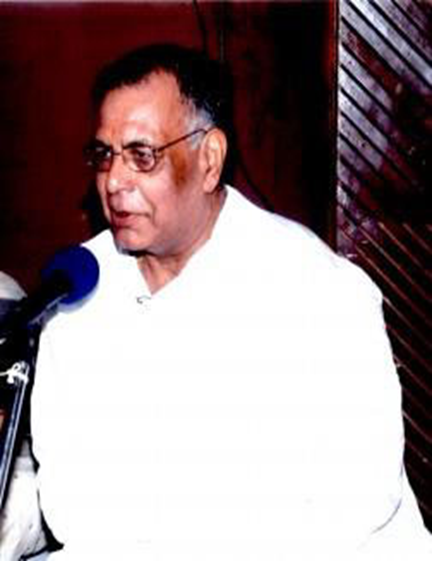
Dr. Bithal Das Mundhra
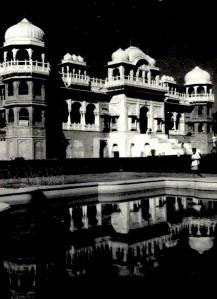
Ratan Bihari Mandir, Bikaner Office of Bharatiya Vidya Mandir
In 2005, Simplex Infrastructures Limited officially became a benefactor of Bharatiya Vidya Mandir with a keen interest in broadening the areas of its social efforts. Subsequently the Publishing Division of Bharatiya Vidya Mandir was shifted to Kolkata. In 2010 ‘Vaichariki’ became a bi-monthly magazine, with its first issue published in May-June. It became increasingly popular with around 4500 copies of every issue being distributed. The publishing efforts include books and periodicals about the research work of various pundits of Indian heritage, spreading knowledge about the roots and foundation of a very old civilization.
Bharatiya Vidya Mandir also regularly organizes seminars on various subjects related to Indian History, Culture, Literature, Art, Religion, Spirituality and Science. These events are graced by various foreign dignitaries and leading scholars from all corners of the country.
During the course of their association, these two organizations also decided to embark on a journey to address a very burning issue. A problem plaguing all fields of work and professions is the lack of quality, trained workers. Our education system, businesses and society in general, are all to blame, by doling out degree centric education to our youth. More than 85 % of our youth do not have the opportunity to study past primary school. As for the 15 % who do, they focus on attaining degrees, not developing skills required to sustain themselves in a professional field of work. This has troubled governments and industries alike, leading to creation of courses and institutes, but barely solving the problem.
The cause of this problem is deep rooted. Rural youth are slowly becoming disenchanted with traditional family handicrafts and rejecting them due to their desire for an urban way of life, and are studying for white collar jobs. This is creating a skill gap. Many people are working as unskilled workers or under-skilled workers for years and that way not meeting the vast need of skilled workers.
To alleviate the situation, Bharatiya Vidya Mandir and Simplex Infrastructures launched the ‘Workers Development Programme’. This is a unique developmental course which was designed with a balance of practical and theory sessions on different engineering trades, infused with enriching sessions on human value and regular sessions of practical training at Project Sites.
There is a great need for supervisors and foremen, the people who do the actual interaction with workers for getting the work done. For that, along with theoretical and practical knowledge, they need managerial skills and capabilities which they have to obtain only through years of experience. There are around 3500 engineering colleges in the country awarding the degree and as many diploma colleges, but there are still no colleges for producing supervisors/ foremen.
Amidst such turbulence, these two organizations have introduced a ‘Supervisors Development Programme’ with a unique idea of giving theoretical and practical training on major areas of civil engineering, since the category do not have any practical education as well as inputs on communication and behavioral skills so as to produce complete, trained and skilled supervisors/foremen with the spirit of positivity and dedication towards organizational growth and individual improvement.
With its belief in nurturing talent and enabling through training, this group has launched various other skill-based training programs on increasing employability of fresh GETs and Diploma engineers. Courses like “Junior Engineers Development Programme” for Diploma engineers & “Graduate Engineer Trainee Development Programme” for GETs are sets of skills which are taught to the freshers of Civil/ Mechanical and Electrical streams. With technical skills, these programs also carry a distinguishing feature; managerial skills which will help them understand and improve their managerial capacity to handle groups and projects efficiently. All their training programs essentially have sessions on human values, attitude development which aims a holistic growth of the individual.
With its belief in nurturing talent and enabling through training, this group has launched various other skill-based training programs on increasing employability of fresh GETs and Diploma engineers. Courses like “Junior Engineers Development Programme” for Diploma engineers and “Graduate Engineer Trainee Development Programme” for GETs are sets of skills which are taught to the fresher of Civil, Mechanical and Electrical streams. With technical skills, these programs also carry a distinguishing feature; managerial skills which will help them understand and improve their managerial capacity for handling groups and projects efficiently. All their training programs essentially have sessions on human values, attitude development, psychology and philosophy as well as physical training which aim a holistic growth of the individual.
All the training, theoretical as well as practical, is conducted at the project sites of Simplex using their infrastructure and the trainers are internal and external experts. The trainees can witness the actual work process and get a firsthand feel of the skills that they are being trained on. This is a novel arrangement for passing on practical knowledge by experienced professionals. Till date around 15000 Workers, 1000 Supervisors, 500 Foremen, 150 Engineers, 350 Overseers, 200 Storekeepers, 100 Commercial/ Administration officers have been trained, with significant augmentation of their skill levels observed at work.